The Evolution of Cosmetology in Unani Medicine
Cosmetology, the science of beauty, deals with conditions that may be embarrassing or disfiguring but are harmless and do not cause physical pain or disability. The distinction between cosmetic diseases and other medical conditions is often blurred. For instance, conditions like female hirsutism, leucoderma, acne, rosacea, and some types of psoriasis have been subjects of debate in both medical and cosmetic contexts.
Historical Context of Cosmetics
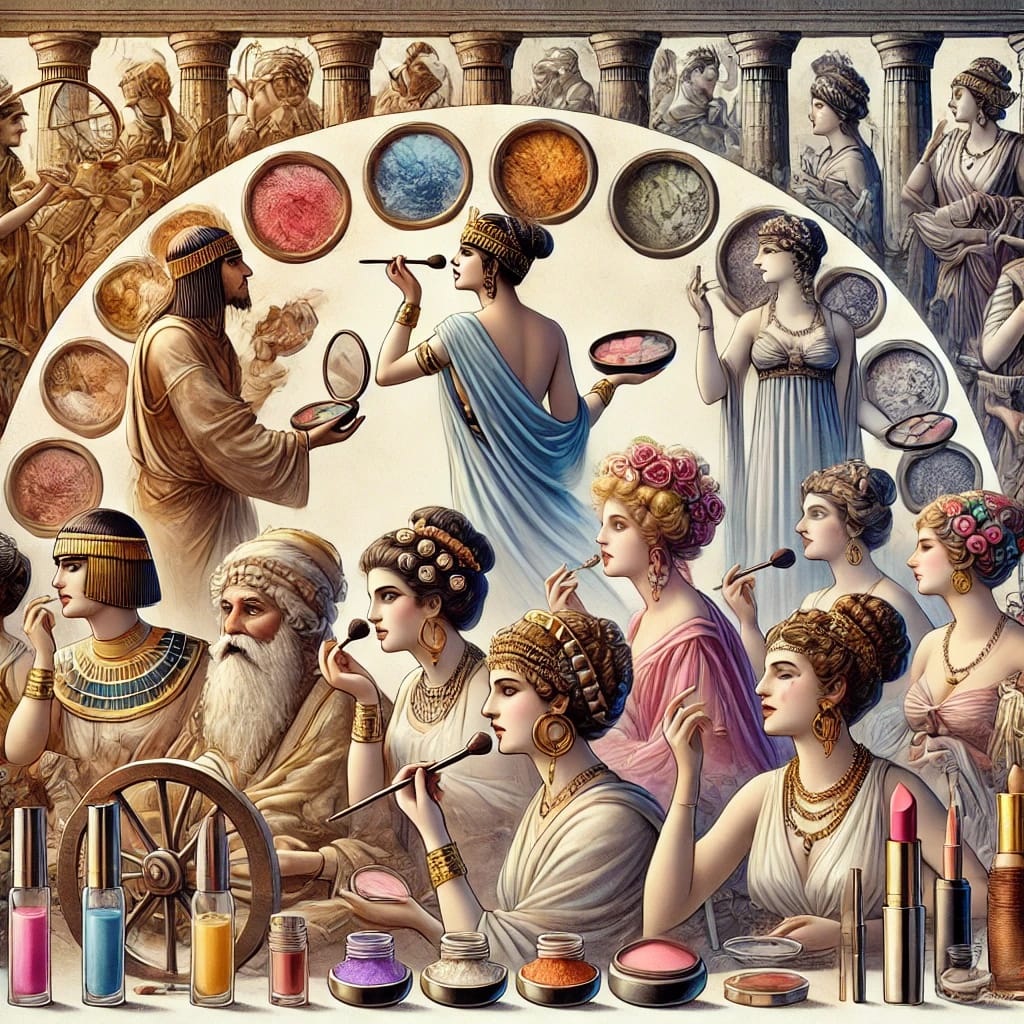
In Unani Medicine, the concept of \"cosmetics\" is not new. Ancient civilizations, including Greece and Persia, utilized various cosmetic practices. In fact, cosmetic formulations and their usage have been documented for centuries across different cultures.
Ancient Greece: Cosmetics were widely used, with notable mentions in the Book of Esther where the Queen, Jezebel, was known to use various eye makeup techniques. Ancient Greek women used olive oil (Roghan Zaitoon) as a moisturizer and applied anti-aging creams made from milk and bread at night.
Ancient Persia and the Middle East: Cosmetics were integral to beauty rituals, with plant-based ingredients like Atropa belladonna (also known as the \"lady\'s killer\") being used to dilate the pupils for a more attractive appearance.
The Contribution of Islamic Scholars
The Arab world, especially during the Islamic Golden Age, played a pivotal role in formalizing the science of beauty, known as Ilmul Zinah (Science of Beauty), which laid the foundation for modern cosmetology. Prominent scholars such as Abu al-Qasim Khalaf ibn al-Abbas al-Zahrawi (936-1013) wrote extensively on the topic in his famous work Kitab al-Tasreef, where he discussed cosmetics and perfumery in a dedicated chapter titled Adviya al-Muzzayanna. This chapter covers a wide range of topics, including perfumes, deodorants, hair dyes, suntan lotions, and other cosmetic formulations
Key Unani Scholars:
Muhammad ibn Zakariya al-Razi (854-932): In his well-known books Kitab al-Hawi and Kitab al-Mansoori, al-Razi discussed skin and hair care extensively.
Ali Bin Abbas Majoosi: In Kamil us Sanaat, Majoosi described various cosmetic preparations, focusing on skincare and hair care.
Ibn Sina (Avicenna): In Al-Qanoon fi al-Tibb, he dedicated an entire chapter on Zeenah (Beauty), outlining various treatments for skin and hair.
These works include numerous formulations and treatments that remain valuable in Unani medicine today, offering remedies for various skin and hair issues.
Ayurvedic Contributions
Cosmetology is also well-established in Ayurveda, with references to cosmetics such as tilak, kajal, and agaru (Aquilaria agalbeha) used in ancient scriptures like Kalidasa\'s Abhijnana Shakuntalam and Meghadootam. The Ayurvedic texts, such as Charak Samhita and Sushruta Samhita, contain detailed descriptions of cosmetic drugs and preparations for various skin and beauty-related issues.
Modern Day Cosmetology and Unani Medicine
The field of cosmetics has undergone a revolution in the modern era, with synthetic chemicals becoming dominant in formulations. However, the rise of synthetic products has led to numerous side effects, prompting a resurgence in the interest of herbal and natural remedies. Unani medicine, with its rich tradition of using plant-based ingredients, is once again being revisited for cosmetic treatments, offering safer, natural alternatives for beauty and skincare.
Conclusion
The legacy of cosmetology in Unani and other traditional medicine systems continues to influence modern cosmetic formulations. With a renewed focus on natural, herbal-based treatments, Unani medicine provides a holistic approach to beauty care, emphasizing the importance of using time-tested ingredients for skin and hair health.
References:
Al-Zahrawi. Accessed from Wikipedia, dated 22.06.2020.
Farheen Begum and Mohammad Idris. \"Unani Cosmeceutical Formulations (Adviya-E-Muzayyana): An Overview,\" International Journal of Herbal Medicine, 2016; 4 (6), pp.163.
Hamiduddin, Akhtar Ali, and Wasim Ahmad. \"Evolution of Cosmetics and Cosmeceuticals in Unani Medicine: A Historical Perspective,\" Journal of Research in Unani Medicine, 2016; 5 (2), pp.72-83.
Latif, A., & Rehman, S. Tauzihat Kulliyat Adviya, Mishkaat Publishers, Aligarh, 2017, pp.239.
Muhammad ibn Zakariya al-Razi. Accessed from Wikipedia, dated 22.06.2020.